

Engineering FAQ · Wanlin
Rockchip RK3588 Elevator Signage Board Manufacturer | Slovakia Export
A: Android 11/12/13/14, Linux Debian/Ubuntu, and OpenHarmony OS options. Boards integrate with cloud CMS platforms including Xibo, ScreenCloud, and NoviSign, with OTA firmware updates and remote device management via Ethernet, WiFi, or 4G LTE.
Direct answer
A: Android 11/12/13/14, Linux Debian/Ubuntu, and OpenHarmony OS options. Boards integrate with cloud CMS platforms including Xibo, ScreenCloud, and NoviSign, with OTA firmware updates and remote device management via Ethernet, WiFi, or 4G LTE.
Executive Summary: Rockchip RK3588 Elevator Signage Board for Slovakia Market
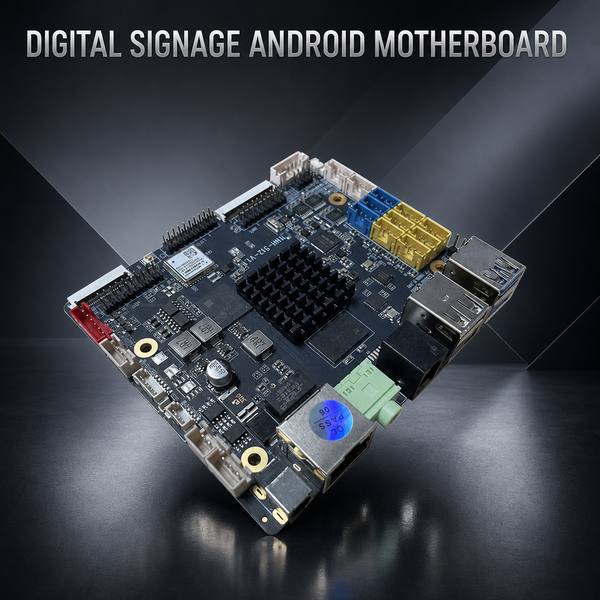
Product Introduction: AndroidSBC Rockchip RK3588 Elevator Signage Board
Core Features:
- Rockchip RK3568/RK3588/RK3576 Platforms: Quad-core Cortex-A55 2.0GHz up to octa-core Cortex-A76/A55 2.4GHz, with 1-6 TOPS NPU options for AI-based audience analytics and smart content scheduling
- Dual-Display Independent Output: LVDS + eDP, LVDS + MIPI-DSI, and dual HDMI combinations support dual-screen different-content and same-content modes for elevator car and lobby installations
- 4K/8K Hardware Decoding: RK3568 supports 4K@60fps H.265/H.264/VP9 decoding; RK3588 extends to 8K@60fps for premium video wall and ultra-wide bar display applications
- Industrial-Grade Reliability: Fanless design, -20°C to 70°C wide temperature range, hardware watchdog, RTC clock, scheduled power on/off, and auto power-on after power failure for unattended 7x24 operation
- Versatile Connectivity: Gigabit Ethernet RJ45, dual-band WiFi 6, Bluetooth 5.0, optional 4G LTE module with SIM slot, RS232/RS485 serial ports for elevator control integration, and USB 2.0/3.0 interfaces
- Flexible OS and CMS Support: Android 11/12/13/14, Linux Debian/Ubuntu, and OpenHarmony options with cloud CMS integration, OTA firmware updates, and compatibility with Xibo, ScreenCloud, and NoviSign platforms
Application Scenarios for Slovakia Market
| Scenario | Recommended models | Key benefits |
|---|---|---|
| Elevator car dual-screen advertising | AS-E110 (RK3568 dual LVDS), AS-E120 (LVDS + eDP) | Independent content on car screens, 7x24 unattended playback |
| Building lobby and directory signage | AS-E130 (RK3588 8K), AS-E140 (portrait bar display) | 4K/8K video walls, wayfinding, tenant directory |
| Networked elevator media networks | AS-E150 (4G LTE cloud CMS), AS-E160 (WiFi 6 OTA) | Remote content management, real-time monitoring |
| Retail and mall elevator touch displays | AS-E170 (10-point touch), AS-E180 (interactive) | Capacitive touch, interactive advertising, analytics |
| Smart building information displays | AS-E190 (RS485 integration), AS-E200 (IoT platform) | Building system integration, emergency notifications |
Q: Which operating systems and CMS platforms are supported?
A: Android 11/12/13/14, Linux Debian/Ubuntu, and OpenHarmony OS options. Boards integrate with cloud CMS platforms including Xibo, ScreenCloud, and NoviSign, with OTA firmware updates and remote device management via Ethernet, WiFi, or 4G LTE.
Q: Do the boards support dual independent displays for elevator installations?
A: Yes. Our dual-display boards support LVDS + eDP, LVDS + MIPI-DSI, and dual HDMI combinations with independent content output on each screen, plus portrait/landscape rotation (0/90/180/270 degrees) for elevator car and lobby configurations.
Project Summary
For more information: www.androidsbc.com | Export Service Hotline: +8613261677119 | Email: Androidsbc@163.com
- Shenzhen HQ: Wanlin Group, Building B, Building 1, Beisida Medical Device Building, 28 Nantong Avenue, Baolong Community, Baolong Sub-district, Longgang District, Shenzhen, Guangdong, China
Application fit
Confirm the operating environment, workload, display, network and peripheral requirements.
Documents to confirm
Check the exact board revision, interfaces, firmware build and certification scope.
Commercial confirmation
Verify quantity, sample plan, lead time, warranty and delivery terms in writing.
